The Institute of Cetacean Research
- You are here:
- Home>
- English Sitemap>
- RESEARCH>
- Ongoing Research>
- POWER



IWC-POWER (International Whaling Commission-Pacific Ocean Whale and Ecosystem Research ) outline
International dedicated sighting surveys (IWC POWER)
The International Whaling Commission-Pacific Ocean Whale and Ecosystem Research (IWC-POWER) program is an international research effort in the North Pacific coordinated by the IWC and designed by the IWC Scientific Committee (SC) in special partnership with the Government of Japan (GOJ). The IWC-POWER in the North Pacific follows the series of IWC-International Decade for Cetacean Research/Southern Ocean Whale and Ecosystem Research (IDCR/SOWER) surveys that were conducted in the Antarctic between 1978 and 2010.
The long-term objective of the IWC-POWER is to 'provide information to allow determination of the status of populations (and thus stock structure is inherently important) of large whales that are found in the North Pacific waters and provide the necessary scientific background for appropriate conservation and management actions.' The first survey of this program was conducted in 2010, and subsequent surveys have taken place on an annual basis.
To attain this long-term objective, the IWC-POWER has utilized short and medium-term objectives. The short-term (phase 1) objectives focus on the ‘least studied’ areas of the central and eastern North Pacific (east of 170°E) taking into account national programmes. This region had not been surveyed since the time of commercial whaling in the 1970's. Much of these areas had now been covered with the notable exception of Russian waters. The medium-term objectives (phase 2) were already agreed by the IWC SC. In addition to the work undertaken in phase 1, the IWC SC agreed that future cruises should have an emphasis on participation from all range states and include consideration of more methodologically focused cruises in some years.
After reviewing current knowledge of the region, a list of medium-term priorities by species for the program was agreed to by the IWC SC at the start of the program. This list was updated in 2020 in view of the preparation of the phase 2 of IWC-POWER.
There is a Technical Advisory Group (TAG) of IWC-POWER, which discuss research objectives and organize short and medium-term activities and priorities including the designing and implementation of the annual sighting surveys. Reports of the TAG are presented for endorsement to the IWC SC.
IWC-POWER surveys are conducted annually in boreal summer. The research area for the short-term priorities (phase 1) was comprised between north of 20°N and south of the Bering Sea, and between 170°E and 135°W, including the Exclusive Economic Zone (EEZ) of the United States (U.S. EEZ) and Canada (Canadian EEZ). Figure 1 shows the survey areas covered by IWC-POWER surveys between 2010 and 2023 while Figure 2 shows examples of specialized vessels and survey track-lines used by IWC-POWER.
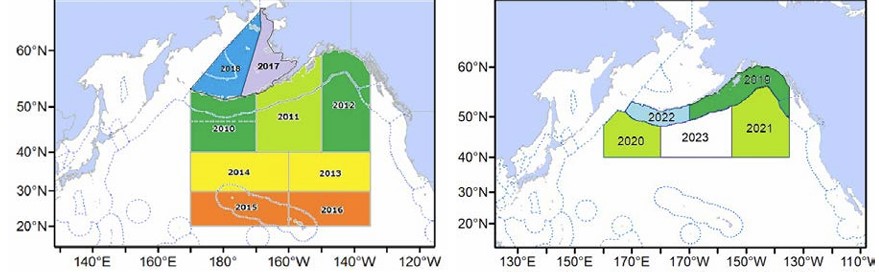
Figure 1. Surveys areas covered by IWC-POWER in the North Pacific, by year.
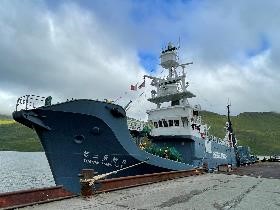
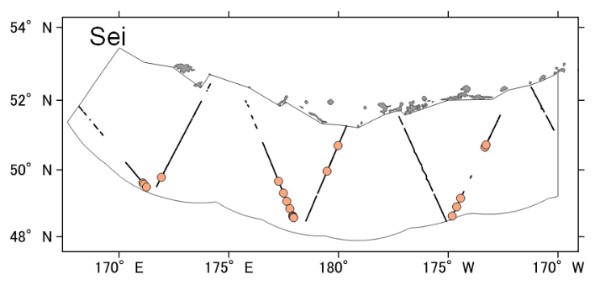
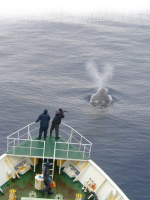
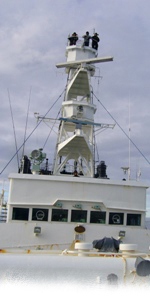
Figure 2. Examples of a specialized research vessel (top) and sei whale sighting along the track-lines (bottom) of IWC-POWER surveys.
The vessels are equipped with instruments and equipment required for collecting sighting data under the Line Transect Method for abundance estimates of large whales. This is the main research activity of IWC-POWER, which is required to fulfill the long-term objective of the program. Scientific personnel assisted by captain and crew members are also engaged in other research activities such as biopsy sampling for DNA studies on stock structure; photo-identification and satellite tracking for studies on distribution, movement and stock structure of baleen whales, and acoustic surveys focused on North Pacific right whales. Stock structure information is important for the interpretation of the abundance estimates.
Based upon results from phase 1, the TAG updated medium-term priorities for IWC-POWER. Regarding species and priorities, the TAG agreed on the following: blue, fin and North Pacific right whales (high priority); sei, humpback, sperm and Bryde’s whales (medium priority); common minke and gray whales (low priority); and bowhead whale (very low priority).
Scientists participating in the IWC-POWER surveys come from Range States, and they are selected by the TAG. So far scientists from the United States, Japan, Republic of Korea and Mexico have participated in the surveys. Figure 3 shows the international team that participated in the 2023 IWC-POWER survey.
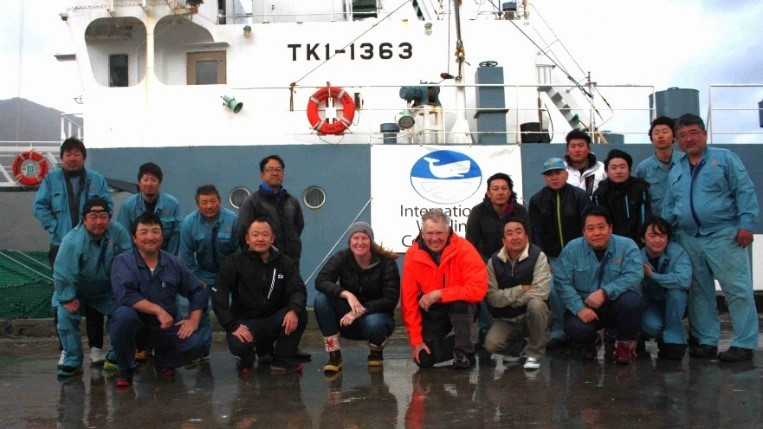
Figure 3. International scientists and crew members of the 2023 IWC-POWER survey.