The Institute of Cetacean Research

- You are here:
- Home>
- English Sitemap>
- RESEARCH>
- Research Activities>
- Abundance Estimation




Abundance Estimation section
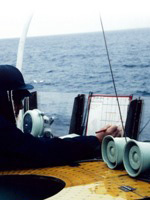
This research section oversees the design and implementation of vessel-based dedicated sighting surveys for abundance estimates of large whales in the central-western North Pacific and Indo-Pacific sector of the Antarctic. Abundance is estimated routinely by the 'design-based approach' using distance sampling method. The section also uses spatial modelling with the aim of estimating overall abundance in relevant areas (‘model-based approach’) and the relationship between density/abundance and environmental covariates. The design and implementation of surveys as well as the analytical approaches for abundance estimate follow protocols and guidelines of the International Whaling Commission Scientific Committee (IWC SC).
In the western North Pacific, the main target species of the surveys and abundance estimates are the common minke, Bryde's, sei and fin whales, which are the target species of the sustainable commercial whaling by Japan in its Exclusive Economic Zone (EEZ). Each of these species has different distribution and migration patterns therefore surveys are designed by this research section for specific species in each year, usually in spring-summer in feeding areas or migratory corridors. This means that new abundance estimates for the four species involve a period of around six years.
During the surveys sighting data are also obtained for other non-exploited whale species and such data are used for abundance estimates in those species to monitor their temporal trend and recovery after historical commercial whaling.
This research section is also in charge of developing new techniques for abundance estimates of whales in collaboration with other research sections. One of those techniques is mark-recapture using genetic data. In recent years, several methods for abundance estimation based on genetic individual identification and kinship inference have been reported, and those methods are being investigated in this section in collaboration with the genetic ecology section. Another approach being developed is the acoustic to detect different species of whales in the field.