The Institute of Cetacean Research

- You are here:
- Home>
- English Sitemap>
- RESEARCH>
- Research organization and Activities




Research organization and Activities
CURRENT ORGANIZATION AND RESEARCH ACTIVITIES OF THE ICR
The Institute of Cetacean Research as a Designed Scientific Whale Research Corporation
In the 2017 Government of Japan(GOJ)'s 'Act for Ensuring Sustainable Use of Whales' (Act No. 76, 23 June 2017), a 'Scientific Whale Research Program' was considered essential to ensure the sustainability of future commercial whaling operations by Japan. The Act also stated that a ‘Designated Scientific Whale Research Corporation' should be in charge of carrying out whale scientific research, and the Institute of Cetacean Research (ICR) was selected as the corporation for such purpose. Guidelines for the 'Scientific Whale Research Program' and an explanation of the role of a 'Designed Scientific Whale Research Corporation' are provided by Articles 6 and 7, respectively, in the 'Act for Ensuring Sustainable Use of Whales'.
In 2017, Japan as a member of the IWC and therefore subjected to the Moratorium was not conducting commercial whaling. In this year, the ICR was implementing the whale research program NEWREP-A in the Antarctic and was preparing to start the NEWREP-NP in the western North Pacific. Those programs had as objectives the acquisition of relevant data for the implementation of the RMP for future Japanese sustainable commercial whaling under the IWC; ICR as the 'Designed Scientific Whale Research Corporation' was in charge of that work.
Japan officially withdrew from the IWC on 30 June 2019. As an effect of this decision, NEWREP-A and NEWREP-NP were halted by the GOJ. Instead, Japan resumed commercial whaling from July 2019 within its territorial waters and Exclusive Economic Zone (EEZ), under national administration. The decision to withdraw from the IWC and start sustainable commercial whaling was explained in an eight-points Statement by Chief Cabinet Secretary of the GOJ dated 26 December 2018.
Given this development, an extension of the 'Act for Ensuring Sustainable Use of Whales' was required and consequently the Act was updated (Act No. 73, 2019) mainly to allow the 'Designed Scientific Whale Research Corporation' (ICR) to support the sustainability of the commercial whaling operations through scientific research of whale resources through non-lethal research.
Therefore, from 2019, and as a 'Designed Scientific Whale Research Corporation', the ICR turned its role from designing and implementing special permit whale research programs in the period 1987-2019 to designing and implementing whale research based on non-lethal techniques with the main objective of producing the scientific information required to assess whale stocks and assure a sustainable use of them. The current organigram of the ICR is presented in Figure 1.
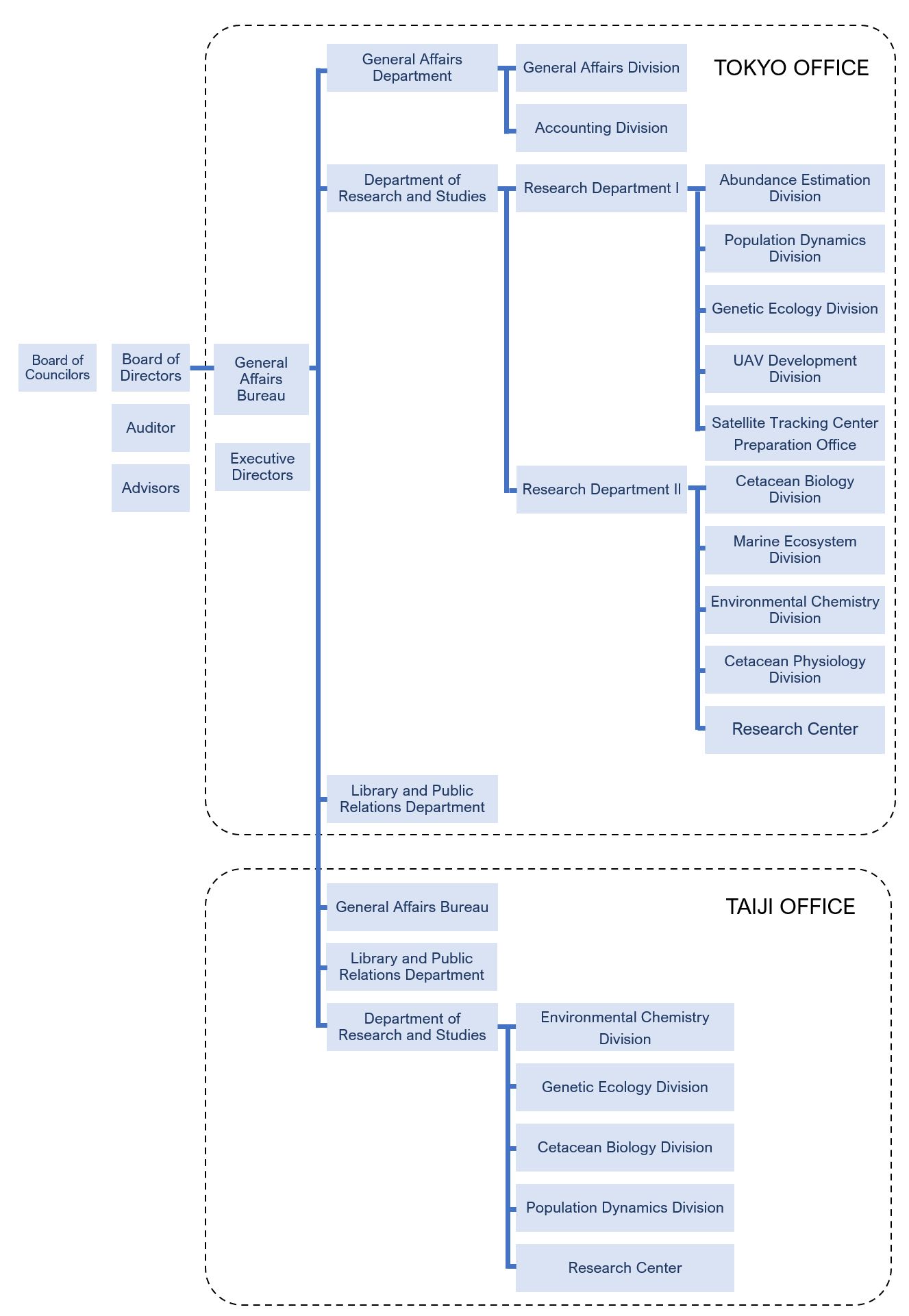
Figure 1. Current organigram of the Institute of Cetacean Research.
The objective of the ICR as a 'Designed Scientific Whale Research Corporation' is therefore consistent with its original objective in 1987:
'The objective of this research institute is to contribute to appropriate management and use of fishery resources by conducting experiments/researches and surveys on cetaceans and other marine mammals, as well as examination on the international situation regarding cetaceans and other marine mammals'.Current research organization of the ICR
Research activities by the ICR has been re-organized into two Research Departments (Department 1 and Department 2) under the Survey and Research Division. Each research department has five research sections. Furthermore, the ICR has two offices, Tokyo Office and Taiji Office. All laboratories dedicated to working on aspects of biology, genetics, feeding ecology, and chemicals of cetaceans are located at the Taiji Office (see Figure 1).
Figure 2 is a schematic representation of the ICR research objectives and the interactions among research departments and sections of the Survey and Research Division required to reach those objectives. There are three main objectives of the research activities of the ICR, which are required to reach its final goal of conservation including sustainable use of cetacean resources:
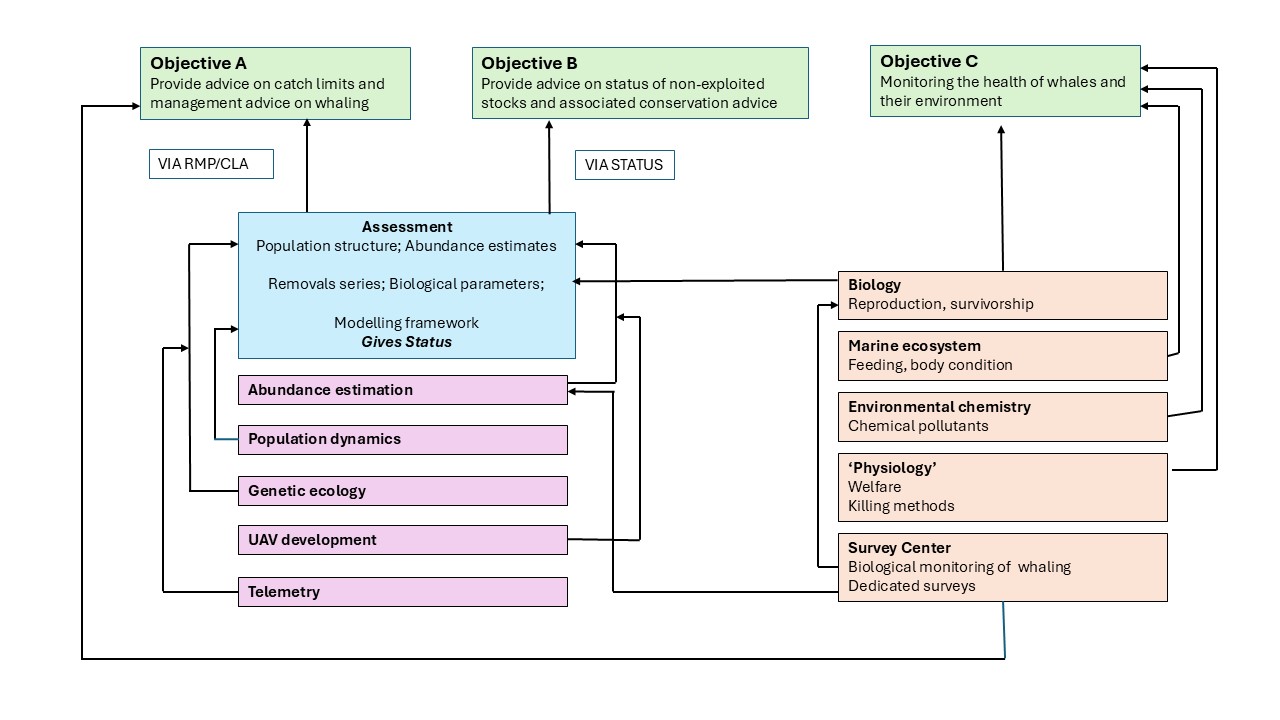
Figure 2. Schematic representation of the Institute of Cetacean Research's research objectives and contribution by the research departments.
Objective A
Provide advice on catch limits and management advice on whaling.
Objective B
Provide advice on status of non-exploited stocks and associated conservation advice.
Objective C
Monitoring the health of whales and their environment.
The two research departments and research sections work in collaboration to reach those three objectives. Department 1 deals with studies that are directly relevant for assessment (all large whale species, exploited and non-exploited species) and management (whale species that are target of commercial whaling). Management refers to the scientific process to calculate sustainable catch limits for commercial whaling. Research under Department 1 includes the analysis of genetic and non-genetic data to investigate stock structure; estimation of abundance using sighting data; and the use of population dynamic models to determine the status of the whale populations.
Department 2 deals with studies of biological and ecological topics which can be used as indicators of the health, condition and role of whales in the ecosystem. Research under Department 2 includes the estimation of biological parameters associated with demography, feeding ecology and the examination of chemical pollutants in whales. Biological parameters estimated at the biology section are also important for assessment-related objectives (Figure 2).
Figure 3 summarizes the main research activities of each section of Departments 1 and 2 and their contribution to the ICR research objectives. Details of the research activities of the research sections are provided below.
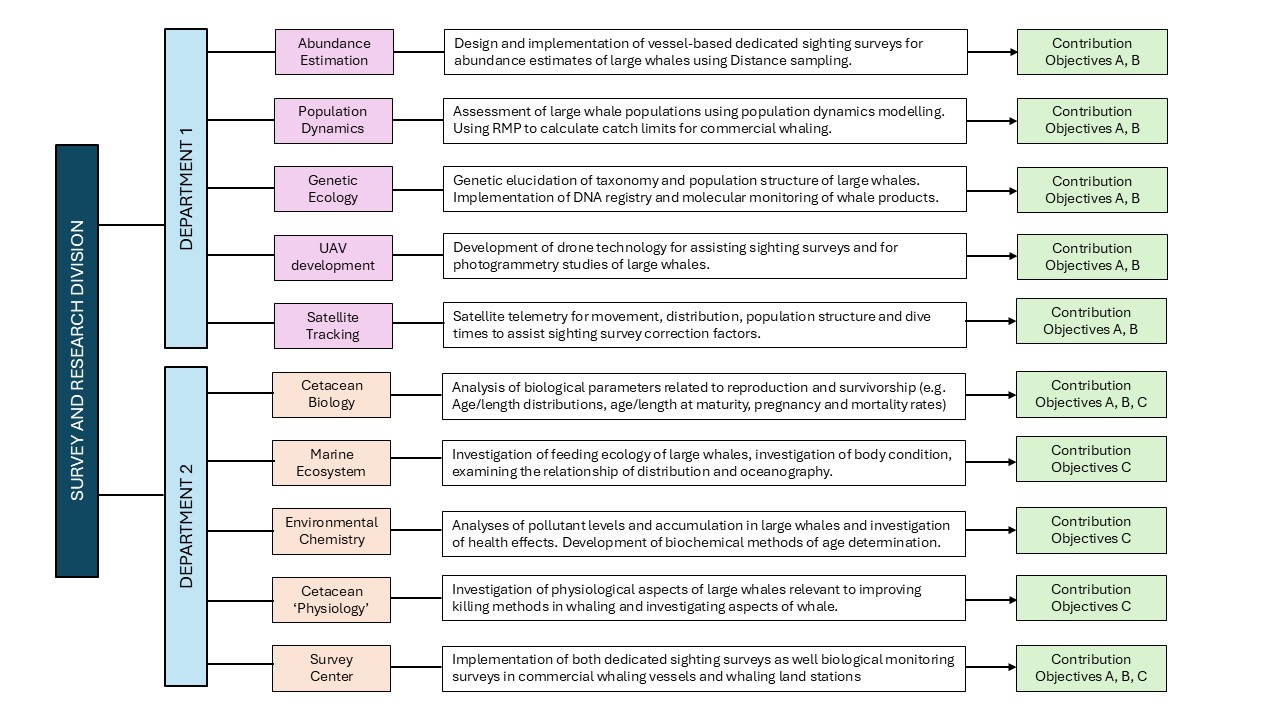
Figure 3. Main research activities of each section of Research departments 1 and 2 and their contribution to the ICR research objectives.
Data and samples used in the analyses conducted by the different sections come from former Special Permit Whale Research Programs (SPWRPs) in both central/western North Pacific and Indo-Pacific sector of the Antarctic as well as from several other surveys e.g., dedicated sighting surveys independent from SPWRPs (national and international), by-catches and stranding surveys, molecular surveys in retail market and biological surveys in former and current Japanese commercial whaling. Several research activities are conducted between or among research sections.
Research Department 1
- Abundance Estimation… Abundance Estimation - Sighting Survey, Vocalization Analysis, Environmental DNA, UAV)
- Population Dynamics…Resource Assessment, RMP Analysis
- Genetic Ecology…Stock Definition, Phylogenetic Development, Molecular Genetics
- UAV Development
- Satellite Tracking
Research Department 2
- Cetacean Biology…Life-history Parameters
- Marine Ecosystem…Marine Ecosystem Model, Predator-prey Relationship, Energy Flow
- Environmental Chemistry…Environmental Pollution
- Cetacean Physiology…Immunology, Histology, Epibionts
- Survey Center